
Tickets that behave like tickets
Statuses that mean something, a state machine that refuses nonsense transitions, internal notes separate from customer replies, merge, linking and a full timeline of who did what and when.
ITIL Helpdesk Only Edition · IT service desk
Support IT Helpdesk turns the email your team is drowning in into tracked tickets with owners, deadlines and a knowledge base, for your IT team, in one place. Built in India, priced in rupees, and your data never leaves the country.
Free for two agents, forever. Unlimited employees can raise tickets on every plan.

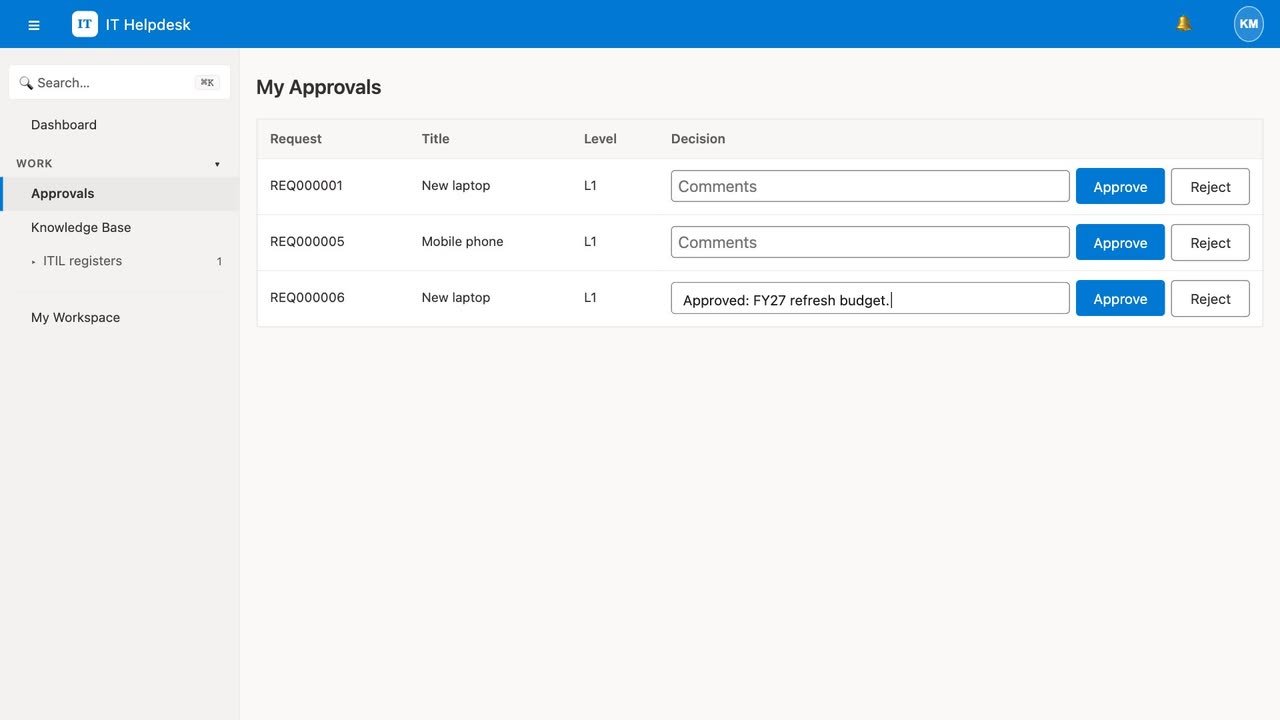
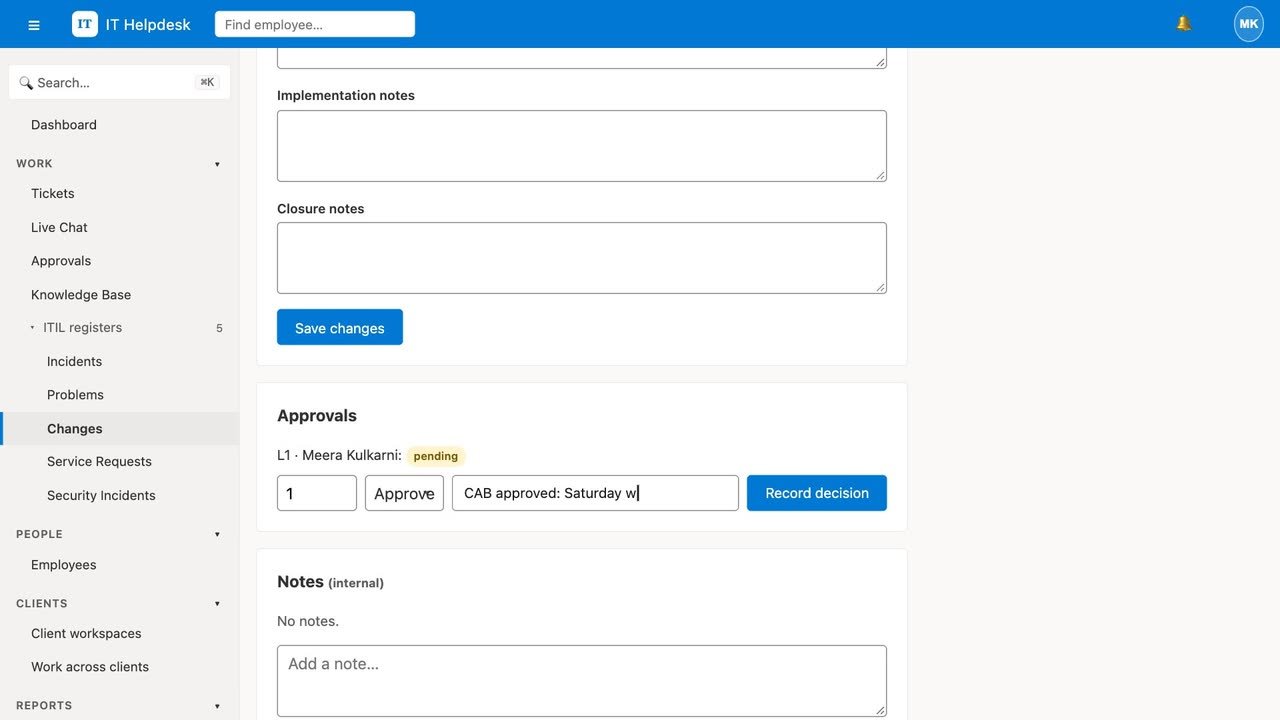
Two and a half minutes in the live demo workspace: an employee raises a ticket, an agent picks it up and replies, a laptop request goes through approval, and the CAB approves a change. Real screens and real clicks, not a mock-up.
Recorded in the demo workspace, which runs on the Business plan. Live chat and catalog approvals are included from Starter; problems, changes and security incidents from Growth. The plan table on the pricing page lists exactly what each plan includes.
Try the demo yourself: every role Step through it slide by slide
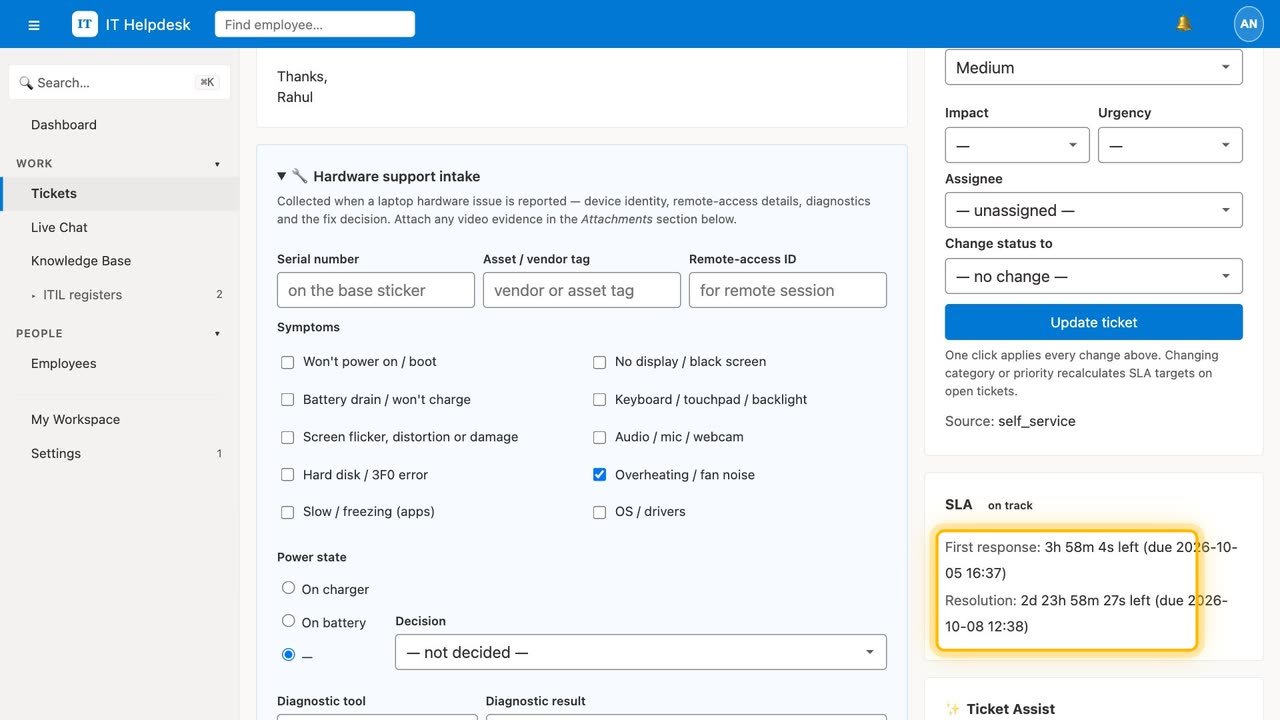
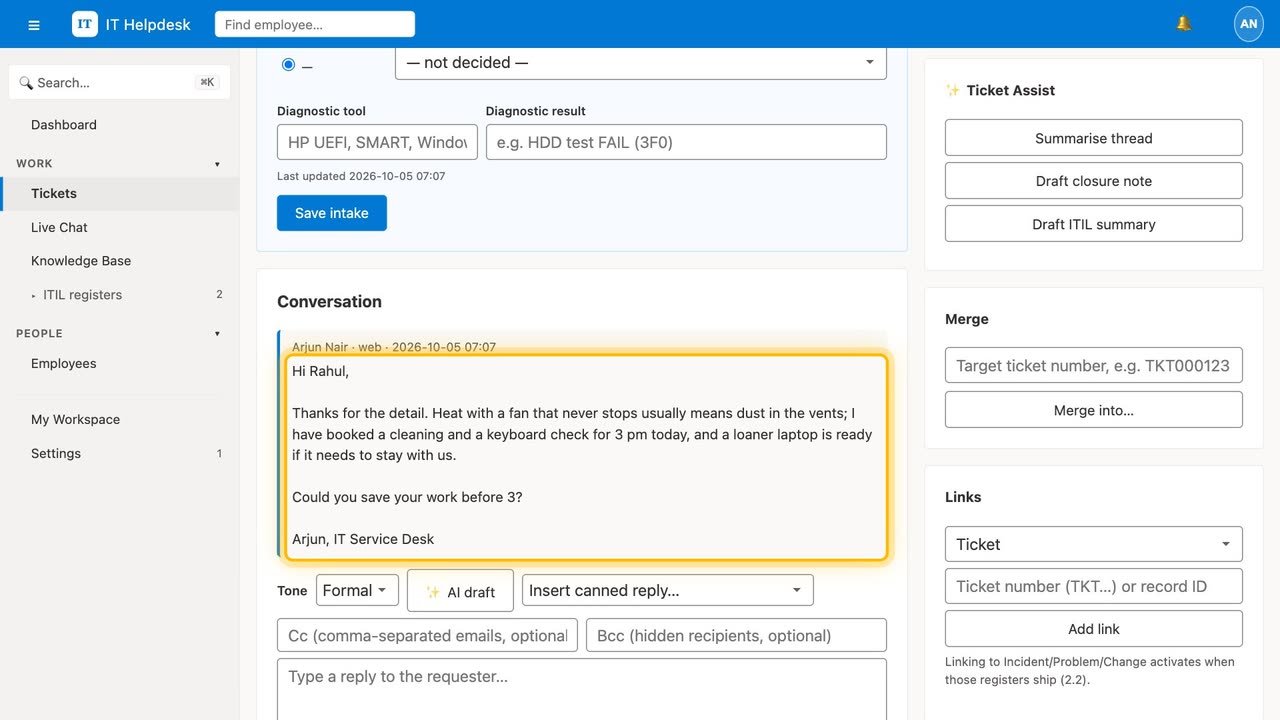
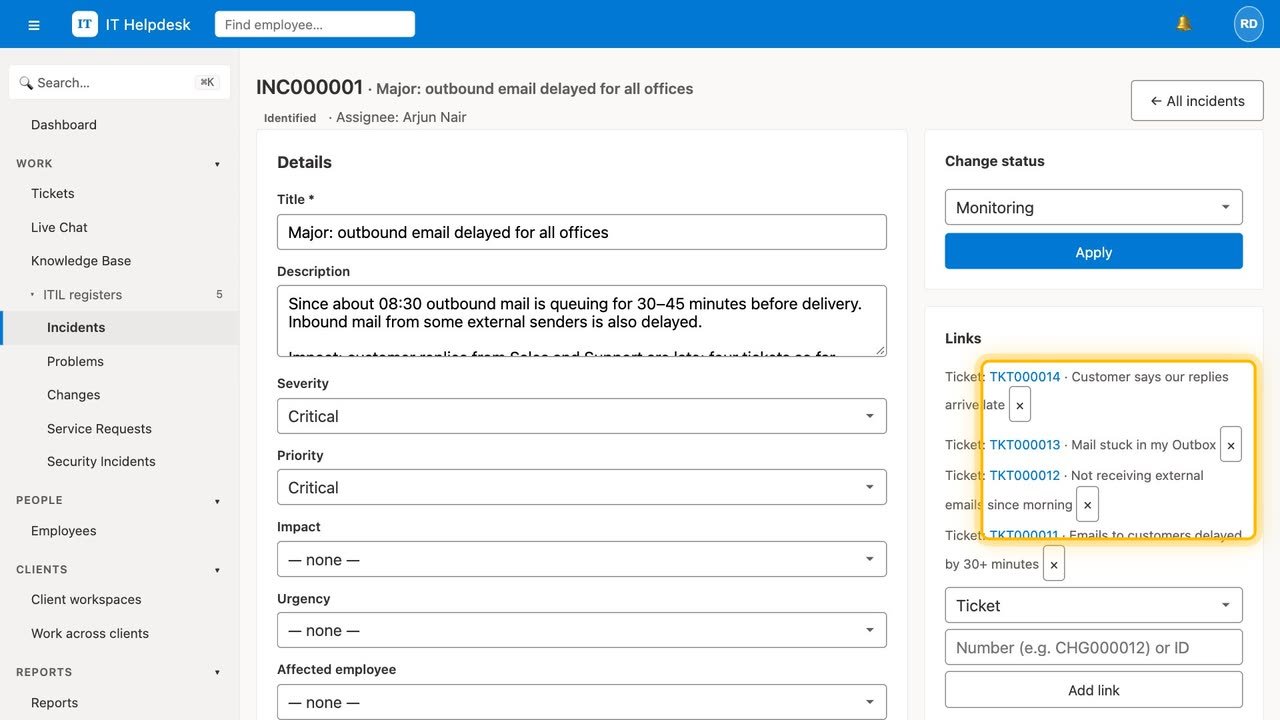
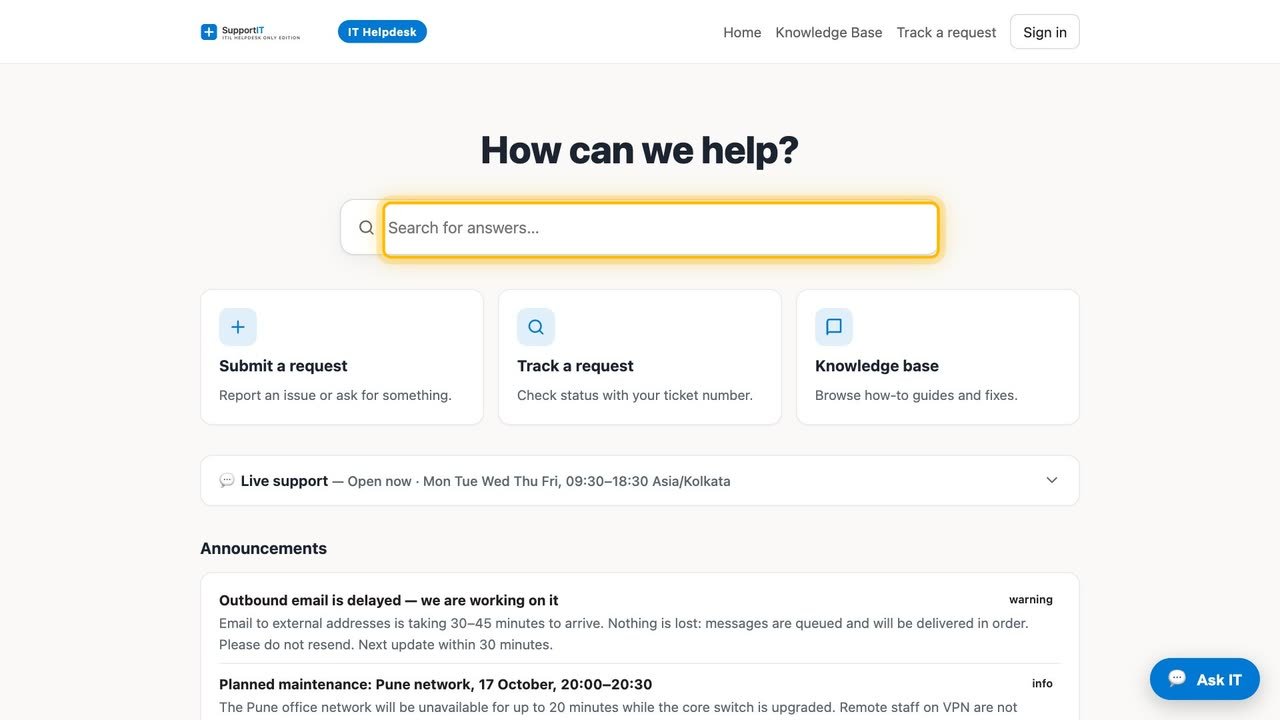
Screens from the demo workspace, exactly as your team would see them.
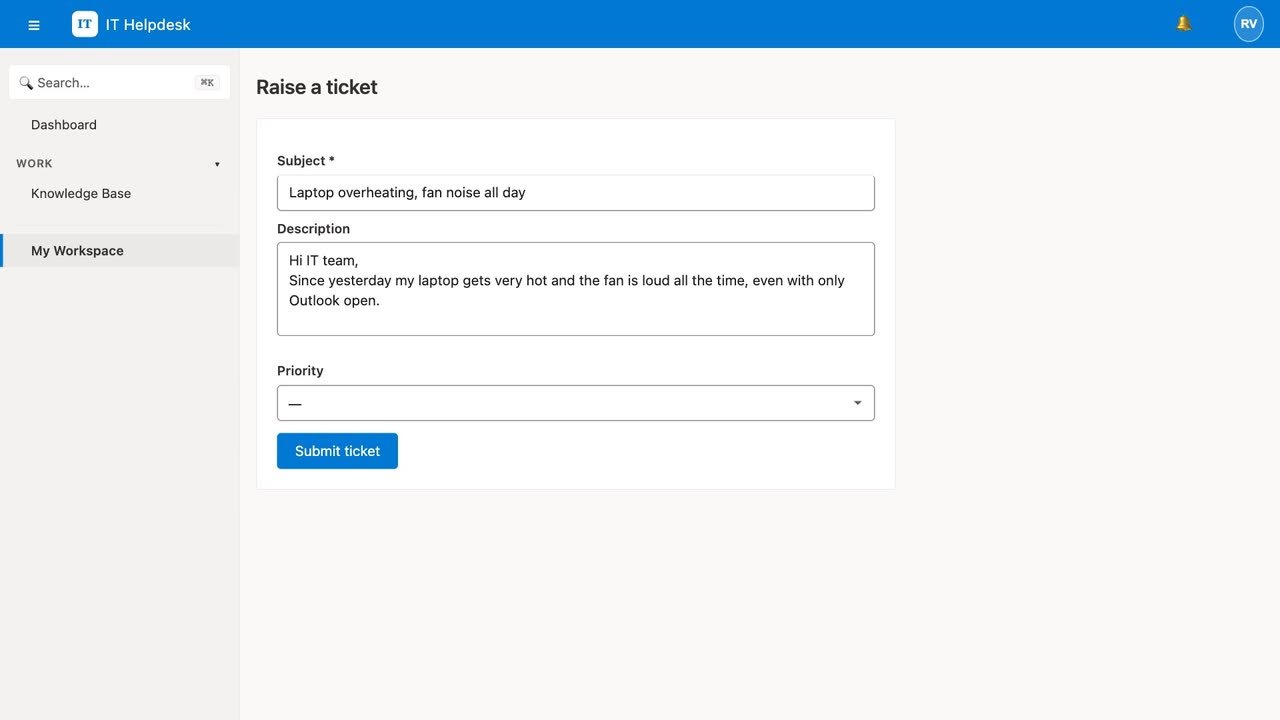
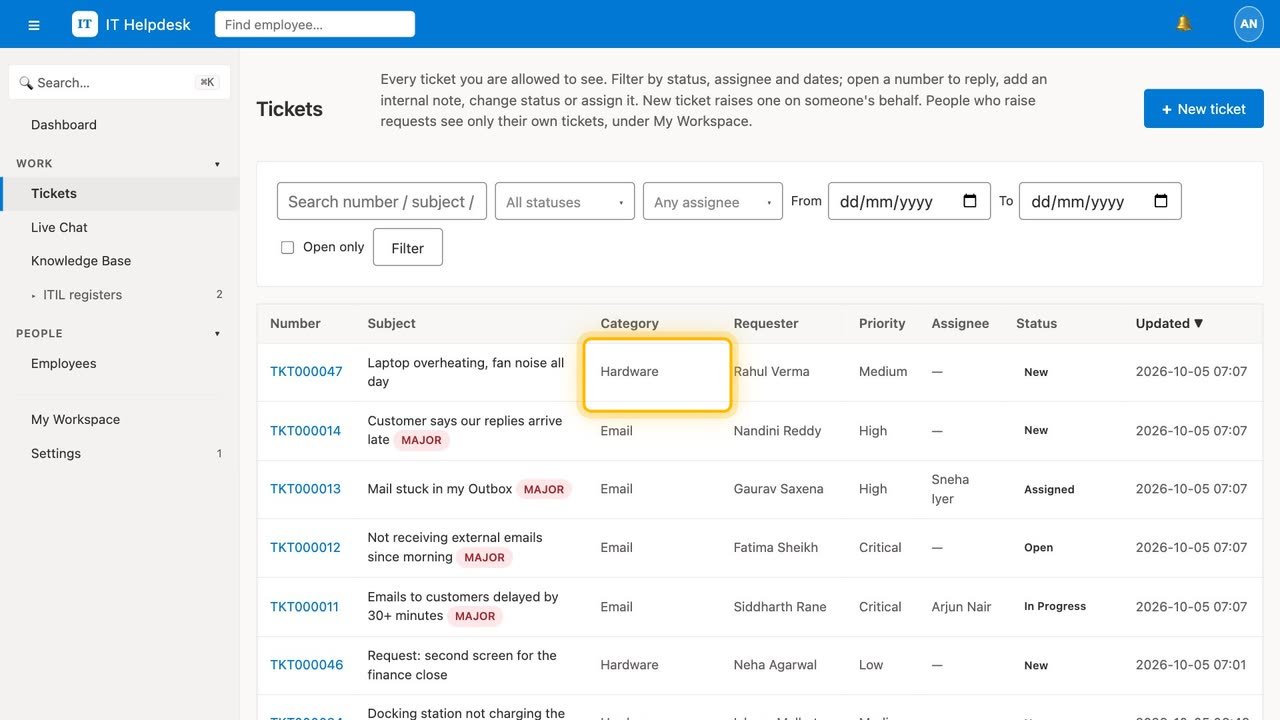
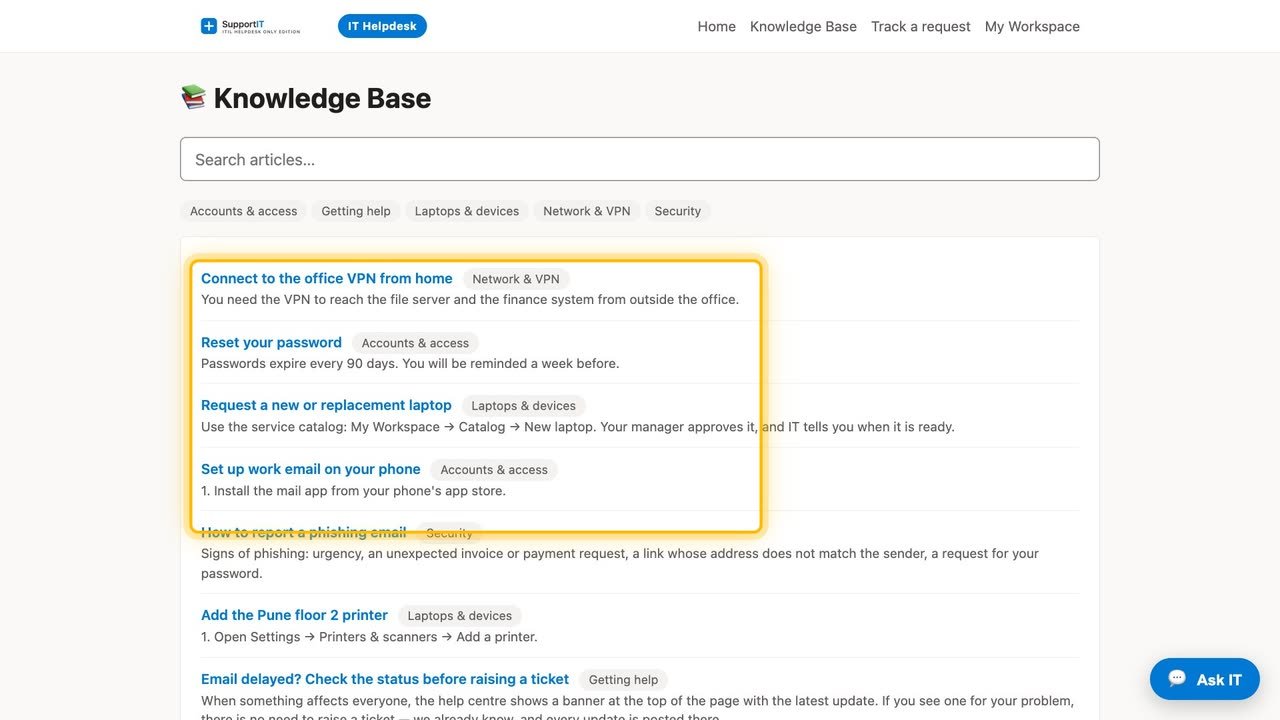
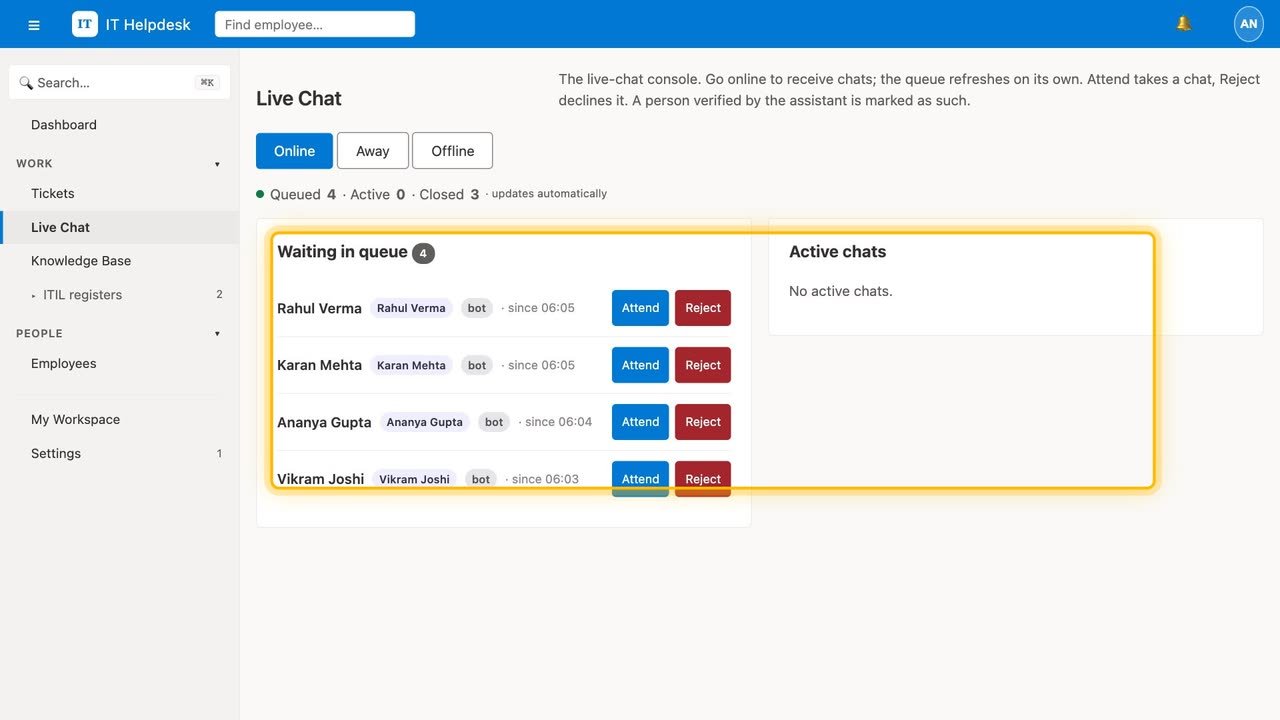
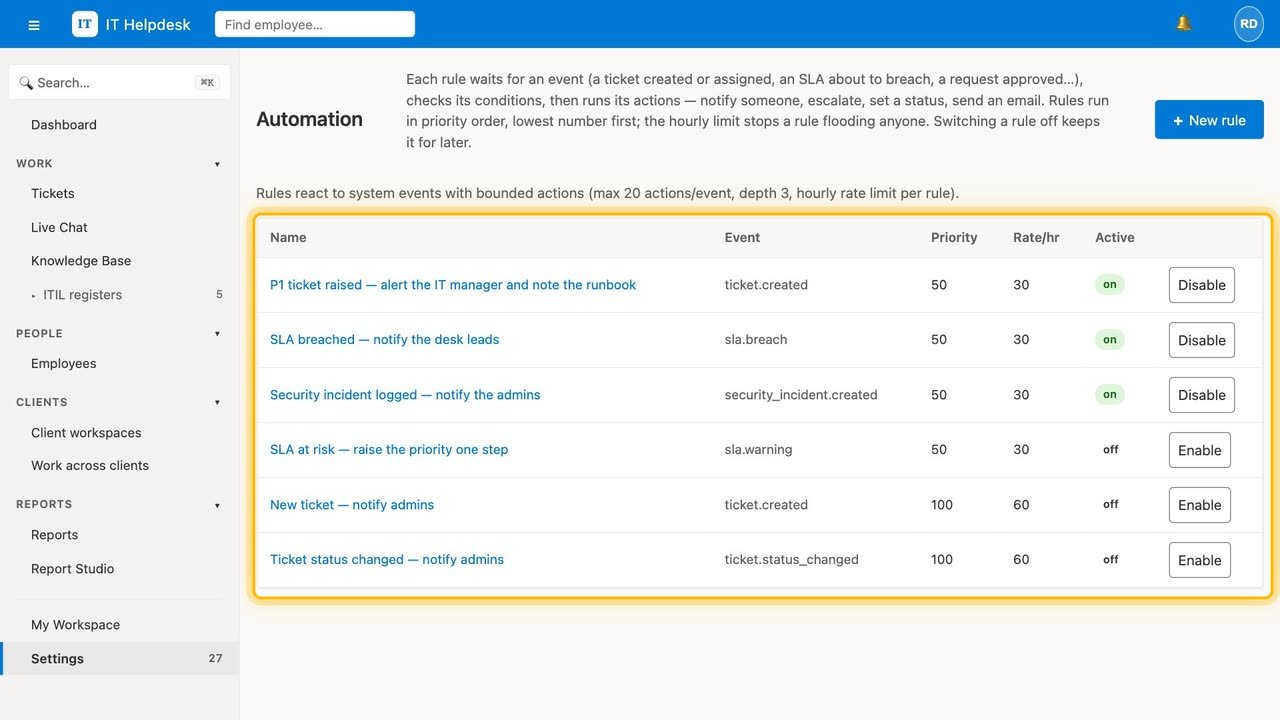
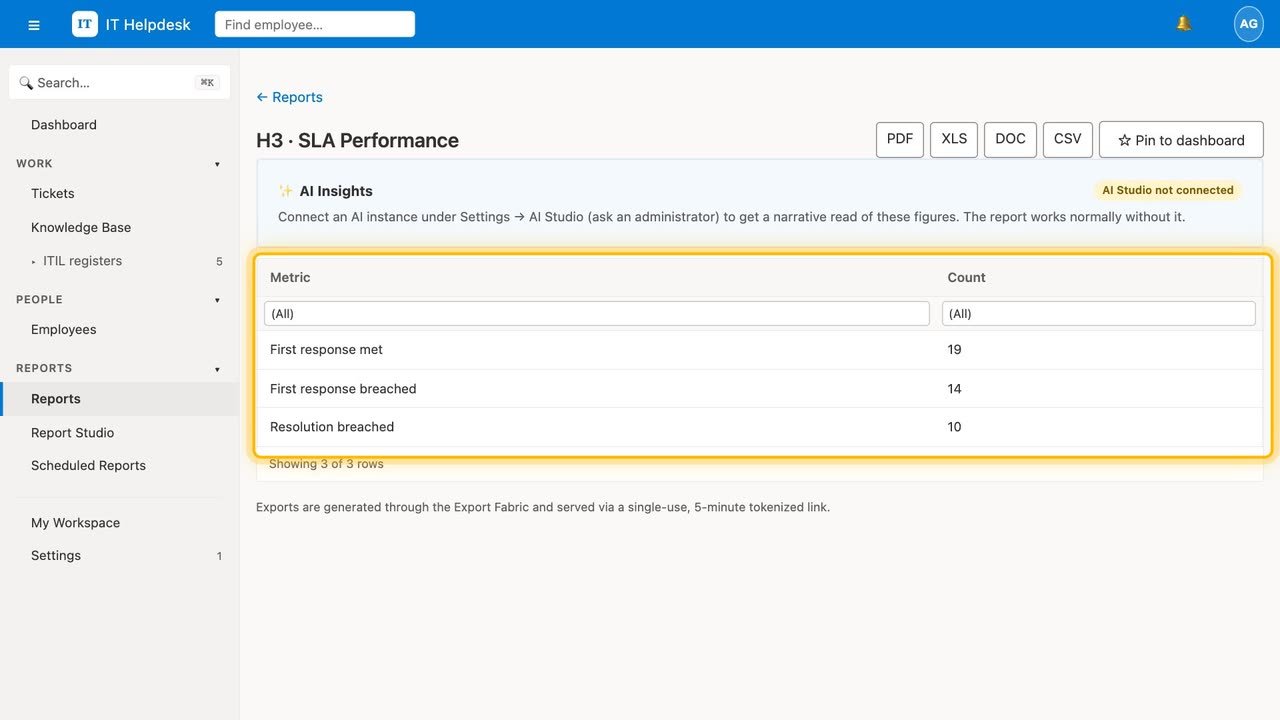
Most Indian IT teams run support out of an inbox called helpdesk@ or it@. It works right up until it does not: two people reply to the same request, a mail gets buried under a newsletter, someone goes on leave and nobody knows what they were handling, and when your manager asks how many requests you closed last month the honest answer is that nobody can tell.
The usual next step is a foreign tool priced in dollars per agent per month, billed to a card, with your employees' names and phone numbers sitting on a server in another country. For a fifteen-person IT team that is a lot of money and a compliance conversation nobody wanted to have.
This is the other option. The same ticketing, SLA and knowledge-base capability those tools have, built for teams here, at a price that makes sense in rupees, on infrastructure we run ourselves in India.
Not a feature list for a comparison grid — the things a working desk uses every day.
Statuses that mean something, a state machine that refuses nonsense transitions, internal notes separate from customer replies, merge, linking and a full timeline of who did what and when.
Connect your existing helpdesk@ mailbox over IMAP. Replies attach to the right ticket using the mail headers, not subject-line guessing, and auto-replies are detected so you never get into a mail loop with someone's out-of-office.
Response and resolution targets per priority, working hours per weekday, your holidays, and clocks that pause while you are waiting on the requester. Every ticket shows its deadlines and whether each is running, paused, met or missed.
Articles with revisions and ratings, plus step-by-step walkthroughs that hand off to a pre-filled ticket when the self-help does not work. Draft articles from resolved tickets instead of writing them from scratch.
The assistant verifies who it is talking to, answers from your knowledge base, looks up real ticket status, and hands over to a human when it should. Data answers come from the database, never from a language model.
Incident management, service requests with a catalog and approvals, problems with known errors, changes with approvals, and security incidents, each with its own lifecycle and links — there when your auditor asks, out of the way when they do not.
Every database row, uploaded file, log line and backup lives on infrastructure we control, in India. Two companies ever touch your data on our behalf: Razorpay, to take a payment, and our email provider, to deliver mail you asked us to send. That list is published on our sub-processors page, and we give thirty days' notice before it changes.
We do not run an AI model for customers. The chat assistant works from rules and your own knowledge base, and out of the box no AI model is called at all. If you want AI answers and drafting, AI Studio connects your own AI model — Ollama on your own server, or any OpenAI-compatible endpoint you choose; you type its address to confirm, and every call is recorded with where it went.
There is no analytics script, no advertising pixel, no web font request and no content-delivery network on any page of this product — the one exception is Razorpay's checkout, on the page where you pay. That is partly a privacy decision and partly why the pages load as quickly as they do.
Every plan includes unlimited requesters. Your whole company can raise tickets, track them, chat and read the knowledge base without adding a rupee to your bill. You pay only for agents — the people who work the queue.
That matters more than it sounds. Priced per end user, a 400-person company pays for 400 seats to support a desk of six. Here you pay for the six.
Start on the free plan with two agents and no card. Upgrade when the desk grows, downgrade when it shrinks, and cancel yourself in two clicks without emailing anybody. Nothing is deleted when a plan changes: a feature the smaller plan does not include is switched off, and everything it held comes straight back if you upgrade.
Signing up creates your workspace with sensible defaults already in place: priorities, ticket categories, auto-categorisation rules, an SLA policy for each priority, canned replies and notification templates.
A four-step welcome guide takes you through the rest — invite the team, connect the mailbox, set your working hours and holidays, brand the help centre — and each step ticks itself off from live data rather than asking you to mark it done.
Your employees get a help centre at supportit.in/yourcompany. No new DNS record, no certificate to buy, no IT project. Send them the link and they can raise a request in about twenty seconds.
Per agent, per month, excluding 18% GST. Unlimited requesters on every plan, including Free.
| Plan | Monthly | Annual | Best for |
|---|---|---|---|
| Free | ₹0 | ₹0 | A two-person desk finding its feet |
| Starter | ₹399 | ₹332 | A small IT team replacing a shared mailbox, with live chat |
| Growth | ₹749 | ₹624 | A desk running SLAs, problems, changes and its own reports |
| Business | ₹1,299 | ₹1,082 | Larger desks: unlimited chat agents, 20 mailboxes, a seven-year audit trail |
No. Free is permanent: two agents, 200 tickets a month, one mailbox and the portal. We would rather a small team used it for years and told people about it than felt pushed into a plan they do not need yet. A new workspace starts with 14 days of Business so you can try everything; when that ends a desk of two agents or fewer simply carries on as Free. With more agents than Free allows, choose a plan or remove agents — until then the workspace is read-only, never deleted.
Anyone with a role other than requester — the people who pick up, reply to and close tickets. Employees raising requests are free and unlimited on every plan. If you deactivate an agent, the seat frees up at your next renewal.
On infrastructure we run ourselves, in India. It is not replicated abroad. The only third parties involved are Razorpay for payments and our email provider for delivering mail you send, and both are listed on our sub-processors page.
Yes. The import wizard takes CSV or Excel for employees, service catalog items and knowledge-base articles, with a mapping step and a rollback if the result is not what you expected. For ticket history from another tool, write to us and we will help.
From your own billing screen, in two clicks, at any time — no email, no phone call, no retention script. Monthly plans run to the end of the period you paid for. Your first invoice is refundable in full for seven days.
No. This edition is the IT service desk only: tickets, SLAs, the knowledge base, chat, ITIL practices and reports. There is no asset register or licence tracking here. A ticket can still record which device it is about, in its description or in a custom field you add.
Two agents free, forever. No card, no sales call, and your data is exportable in full from the first day — so there is nothing to lose by trying it properly.